
Schools, parent organizations, and grassroots organizations around the state are laser focused on Olympia and ready to advocate for our students. Fund SPS believes that every student deserves a fully funded education and we are sharing education to communities around the state so advocacy can be easy for anyone regardless of time or resources available.
Please feel free to tailor this information to fit your community’s needs.
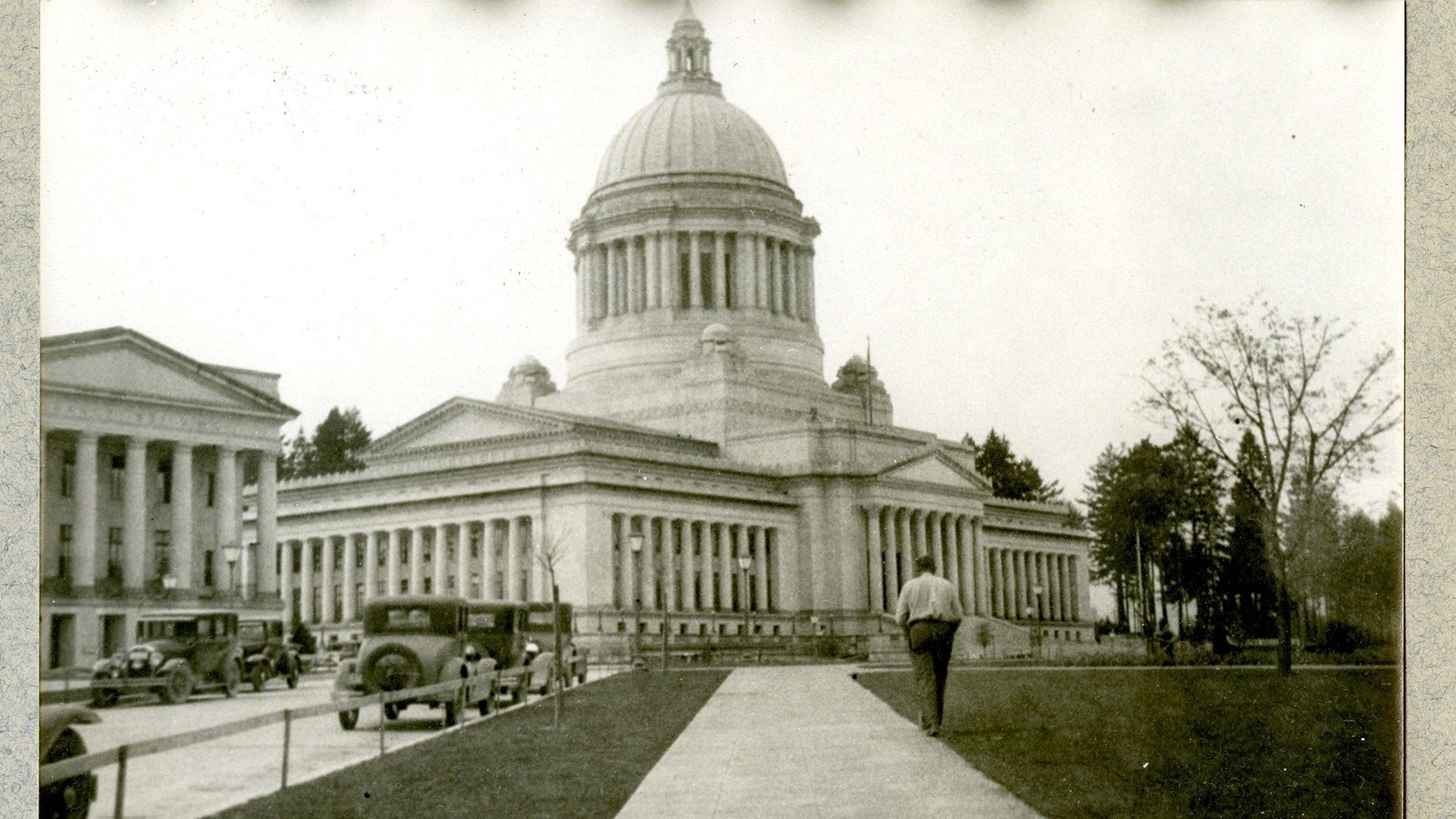
Photo courtesy of the National Parks Service
Basics of the State Legislature
The Washington State Legislature are the lawmakers in our state. The legislature has two houses: the House of Representatives and the Senate.
What is the difference between the House and the Senate?
State Senators are elected for four year terms. State Representatives are elected for two year terms. The two houses are part of a system of checks and balances for our government.
Washington state is divided into 49 legislative districts, each of which elect one senator and two representatives.
The Washington House of Representatives has 98 elected Representatives and the Washington State Senate has 49 elected Senators plus the Lieutenant Governor acting as its President.
What is a biennium? The Legislature runs on a biennium. A biennium means two years. Washington State passes budgets on a two-year cycle, beginning on July 1 of each odd-numbered year.

Legislative Basics
-
School Funding Overview
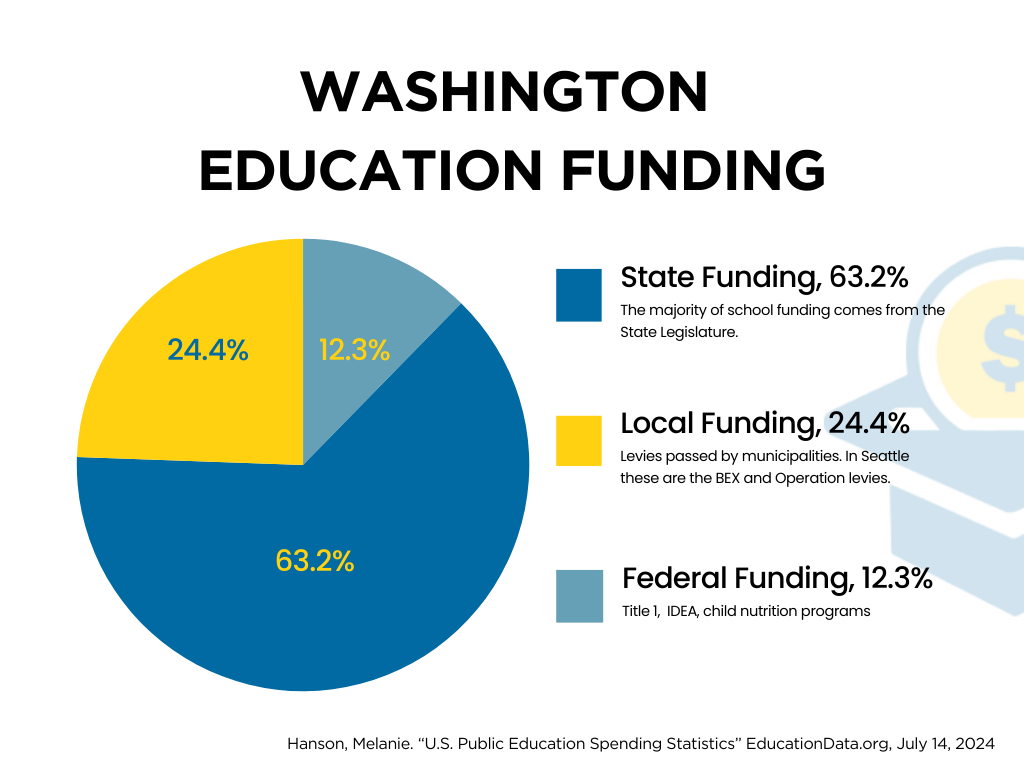
Public schools (K-12) are financed through a combination of local, state, and federal dollars in proportions that vary across and within states.
*Nationally, the federal government provides 13.6% of funding for public K-12 education.
Washington K-12 schools receive $2.69 billion, or $2,470 per pupil, from the federal government.
State funding totals $13.8 billion or $12,680 per pupil.
Local funding totals $5.33 billion or $4,890 per pupil.
*Hanson, Melanie. “U.S. Public Education Spending Statistics” EducationData.org, July 14, 2024
-
Basic Legislative Process
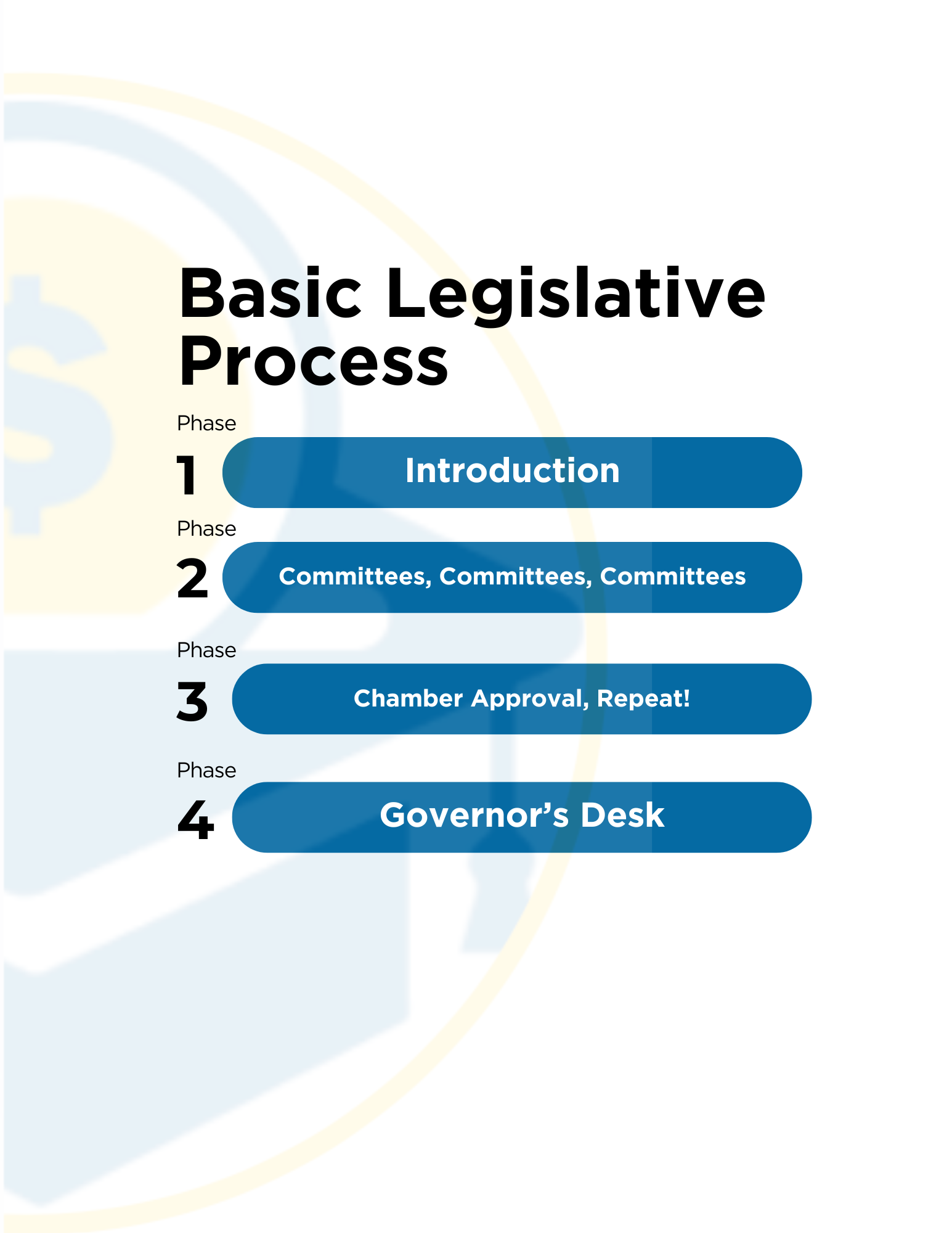
Phase 1: Introduction
The excitement of the beginning! The bill is introduced to the chamber, given a number, and sent out into the world of committees.Phase 2: Committees
Standing Committee, Rules Committee, Ways and Means Committee. The committee process is a critical point for a new bill.Phase 3: Chamber Approval, Repeat
This is the phase where amendments can happen and the bill is voted on in its chamber.
If approved, it happens all over again in the other chamber starting from phase 1!Phase 4: Governor’s Desk
After both chambers have signed off, it’s time to get the final signature from the Governor.There are many crucial points of communication during these processes.
Fund SPS will continue to connect our communities; amplifying our voices in the most important places and to the most important people.
-
How to Sign Into a Bill
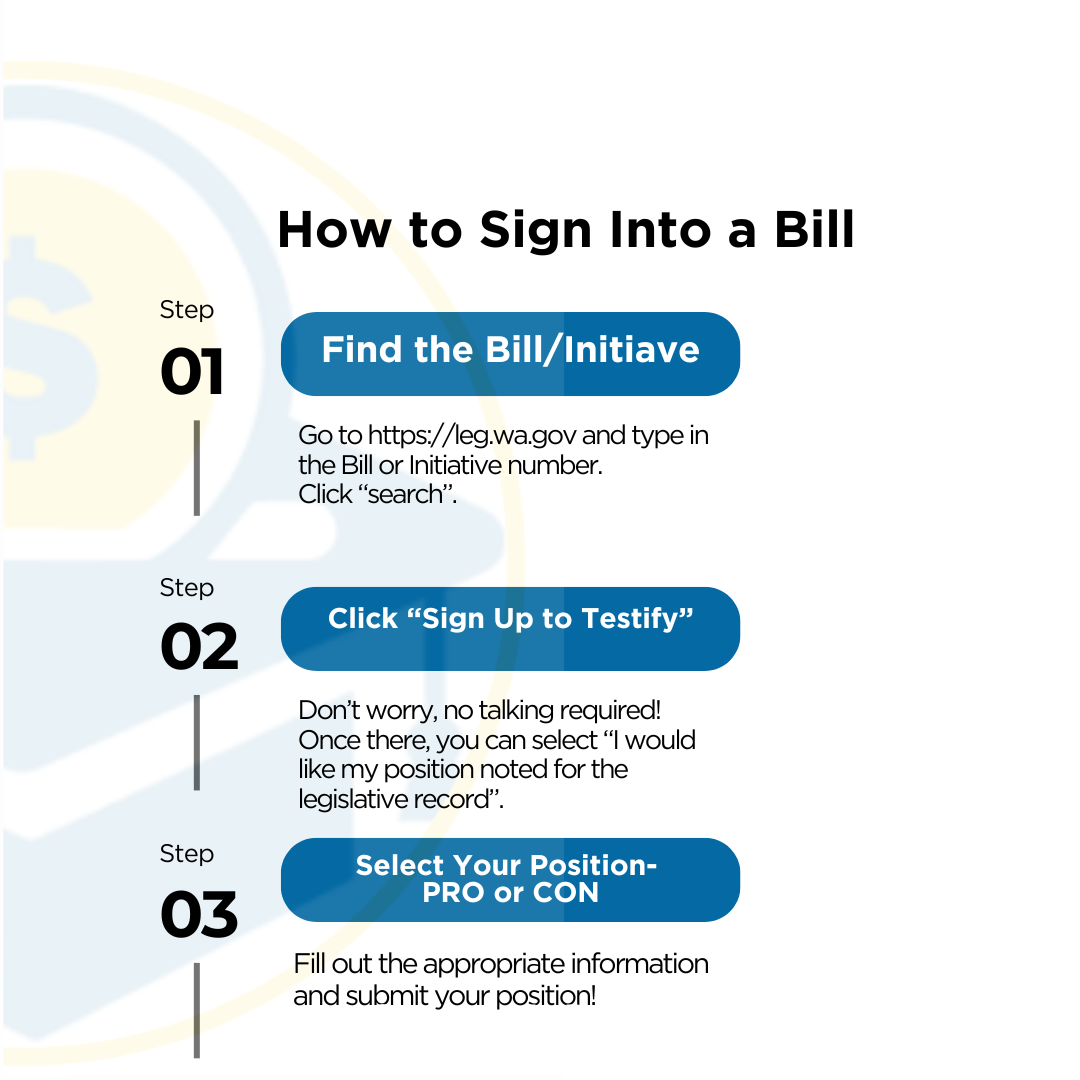
Step 1: Find the Bill/Initiative
Go to https://leg.wa.gov and type in the Bill or Initiative number. Click “search”.Step 2: Click “Sign Up to Testify”
Don’t worry, no talking required! Once there, you can select “I would like my position noted for the legislative record”.Step 3: Select Your Position- PRO or CON
Fill out the appropriate information and submit your position!